In 2026, the Utah Legislature passed SB 242, which sets new rules for Salt Lake City streets. The law requires the City to maintain vehicle capacity on key roads and get state approval before making changes that could reduce that capacity.
What does the law require?
SB 242 requires the City and UDOT to work together on the following:
- Create a critical routes map: The City and UDOT must agree on a map that classifies Salt Lake City streets into four tiers. The tier a street is assigned will be based on its importance to regional transportation and determine the types of infrastructure changes that would need UDOT approval.
- Enter into an agreement: The City and UDOT must formalize our partnership through an agreement that outlines how we will coordinate on projects on Tier 1, Tier 2, and Tier 3 roads going forward.
- Follow new agreed upon procedures for changes on major streets: Before making changes to Tier 1 or Tier 2 streets, which are usually the most heavily traveled roads, the City must complete a data collection and impact analysis, conduct community and business outreach, and receive approval from UDOT. “Highway reduction strategies,” such as removing travel lanes, that impact vehicle capacity are not allowed on Tier 1 streets. The City will also follow agreed upon procedures for Tier 2 and Tier 3 streets.
- Mitigate impacts of traffic calming measures and highway reduction strategies on:
- 300 West from 400 South to 900 South
- 200 South from 300 West to 300 East
- 400 South from West Temple to Interstate 15
What is a highway reduction strategy?
The Utah Legislature defined a highway reduction strategy on line 3185 of SB 242 as:
“A strategy that has the potential to permanently decrease the number of vehicles that can travel on an arterial or a collector highway per hour, including:
- Reducing the number of motorized vehicle travel lanes on an arterial or collector highway;
- Narrowing existing motorized vehicle travel lanes on an arterial or collector highway;
- Any other strategy that, when implemented, may reasonably be expected to increase congestion or impede traffic flow for motor vehicles driving on an arterial or collector highway;
- Has the potential to permanently reduce the availability of on-street parking.”
Which streets are collectors and arterials?
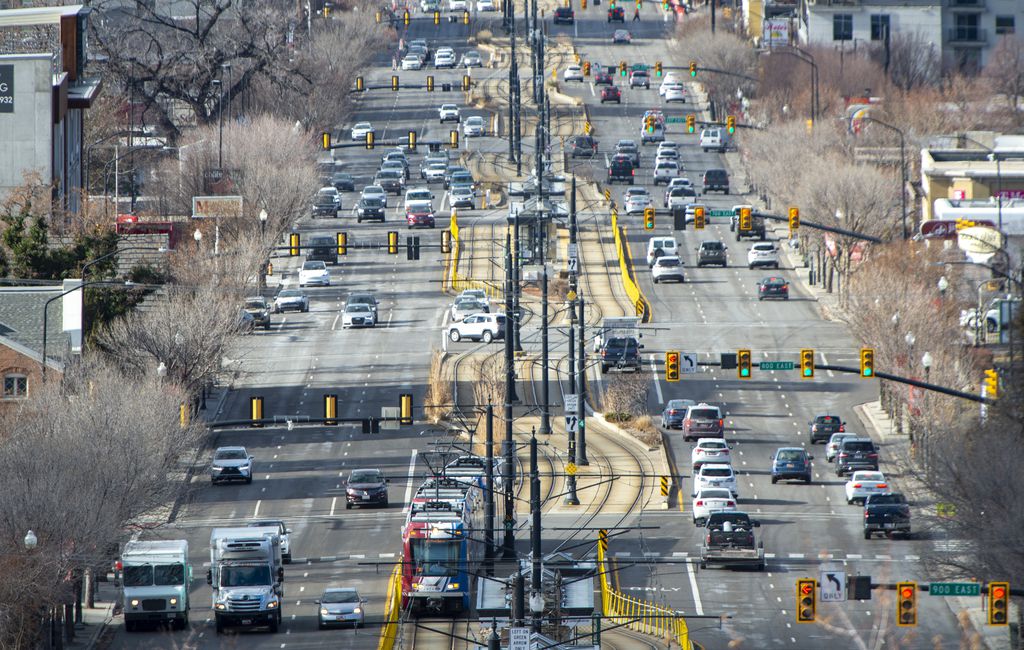
Arterial Streets carry traffic across long distances, connecting neighborhoods and moving commuters through the city. They typically have multiple lanes, with speed limits of 30 to 45 miles per hour, and controlled access to neighboring properties.
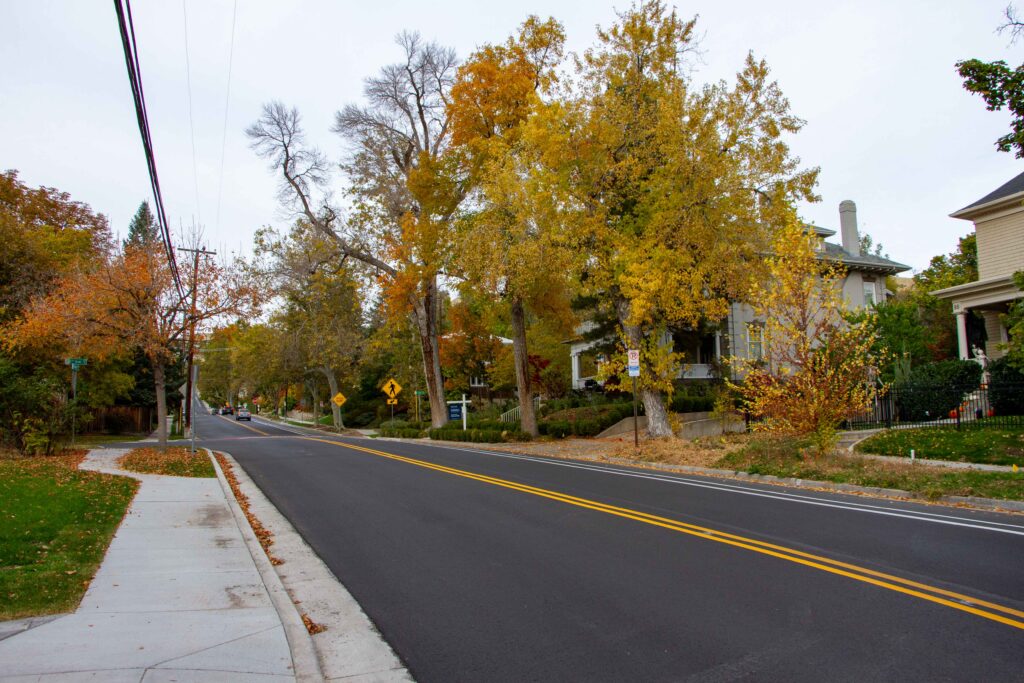
Collector streets link arterials to local streets. They usually carry less traffic at lower speeds than arterials, cover shorter distances, and provide direct access to neighboring properties. Traffic on collectors is a mix of local trips and commuters heading to nearby destinations.
What does this mean for my street?
Safety improvements on Tier 1 streets will require UDOT approval before the City can implement them. Highway reduction strategies are not allowed on Tier 1 streets. Highway reduction strategies may be allowed on Tier 2 streets, but will require UDOT approval. Once the critical capacity routes map is finalized, residents can check their address to see which tier their street falls under. We will post that map here.
What’s happening now?
Salt Lake City and UDOT are working together to create the critical capacity routes map, enter into an agreement, and identify ways to mitigate impacts of the three identified projects. This page will be updated with more information.
Who should I contact if I want a change on my street?
You can provide feedback to Salt Lake City at [email protected].
You can also provide feedback to UDOT at [email protected].