August 2026 update: Construction is underway. Click on roads below for construction updates.
2026 Pavement Overlays
Salt Lake City will be completing pavement overlays at several locations throughout the city. An overlay removes and replaces the top layer of asphalt, creating a smoother driving surface while extending the life of the roadway. Work will also include the replacement of select driveway approaches, sidewalk panels and sections of curb & gutter. Some locations may include the installation of speed bumps. Location-specific details can be found below. Actual work activities may vary as real word project conditions evolve. Construction at each location is expected to last approximately 4 to 5 weeks. Construction schedules are subject to change due to weather, site conditions, and material availability.
Find your road below
Project Details
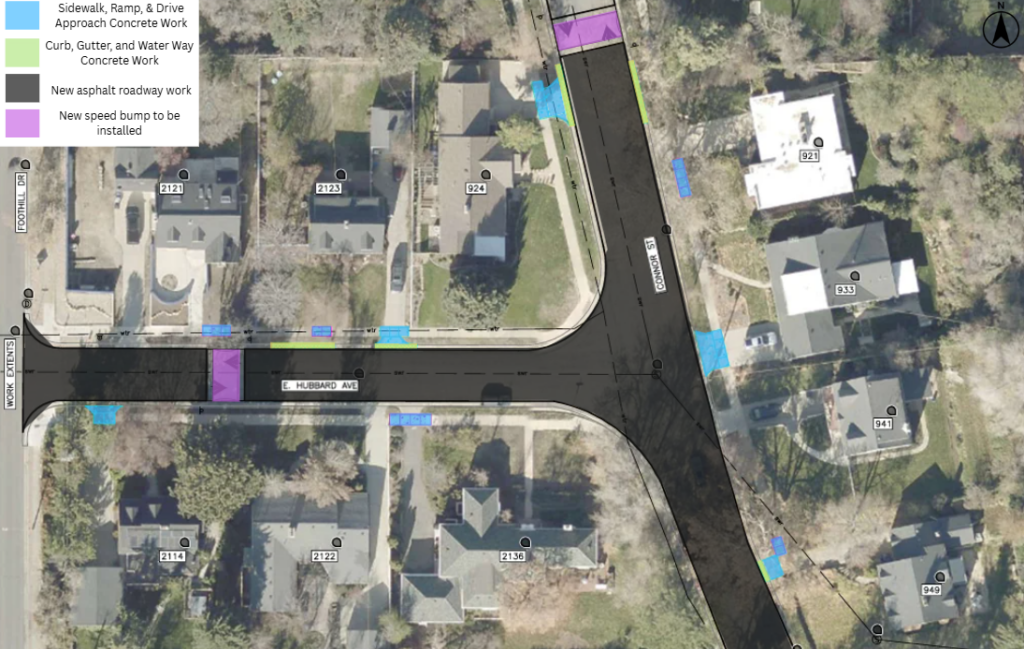
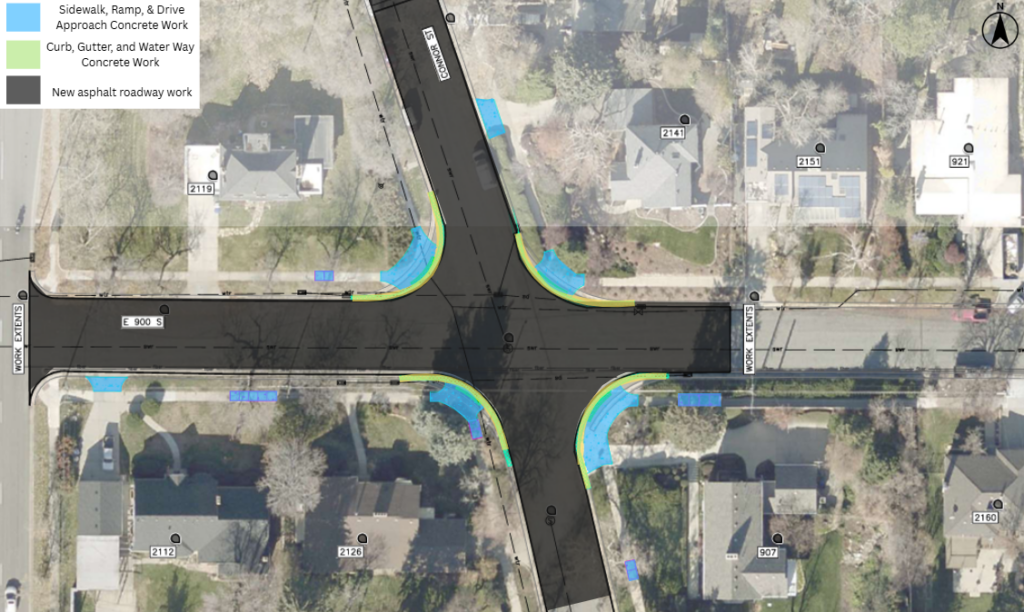
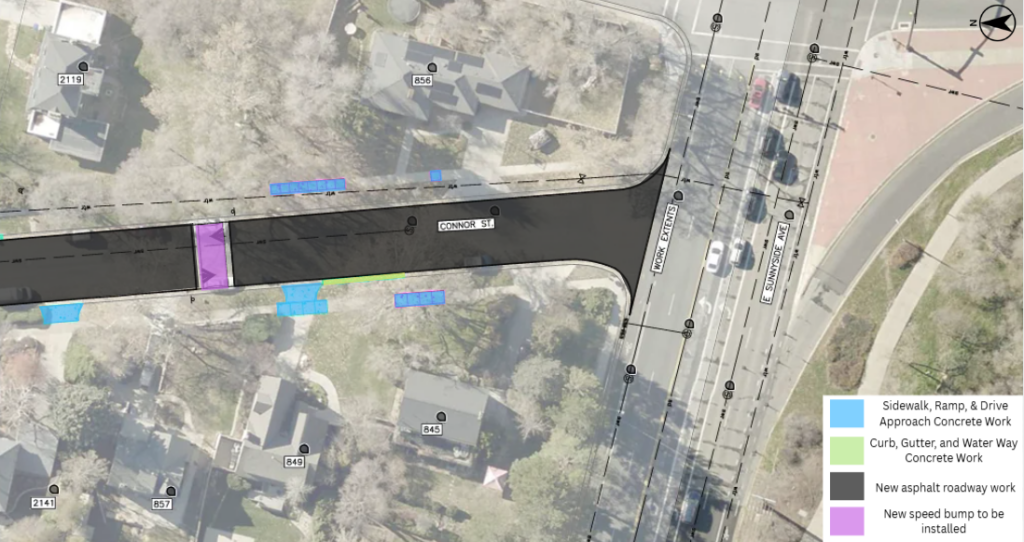
East Hubbard Avenue & Connor Street Overlay
Location: Hubbard Avenue from Foothill Drive to Connor Street, 900 South from Foothill Dr to Connor Street, and Connor Street from Hubbard Avenue to Sunnyside Avenue.
October 2026 Update: Concrete work is underway and is expected to continue until the end of October. Following the concrete, pavement milling and repaving will be completed.
See detailed project maps below:
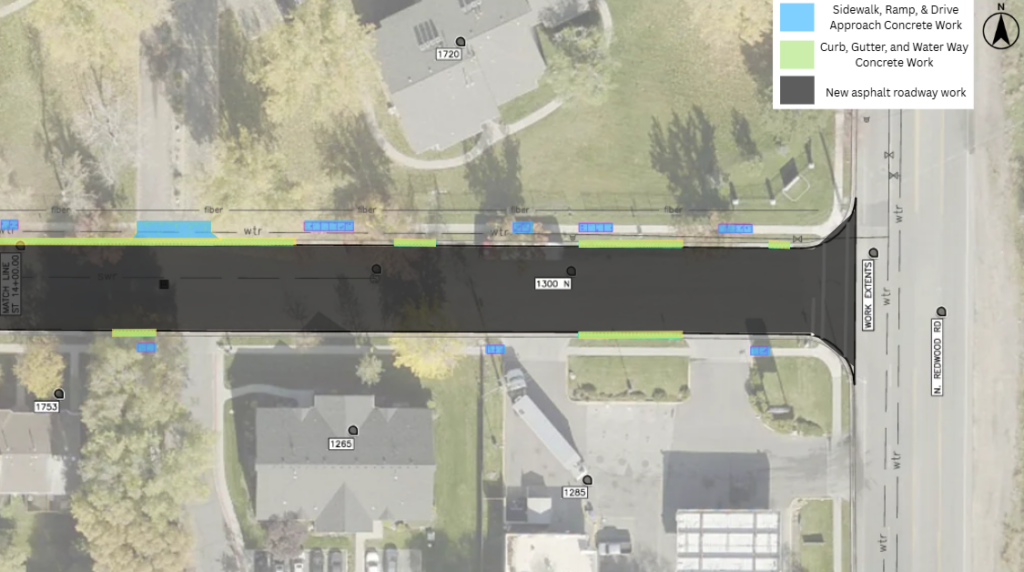
1300 North Overlay
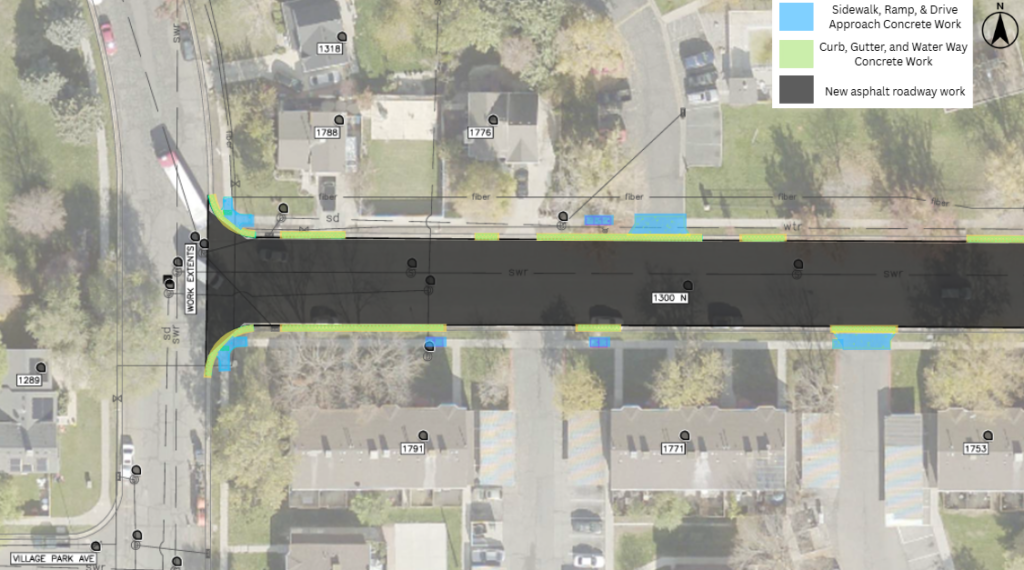
Location: 1300 North form Morton Drive to Redwood Road.
See detailed project maps below:
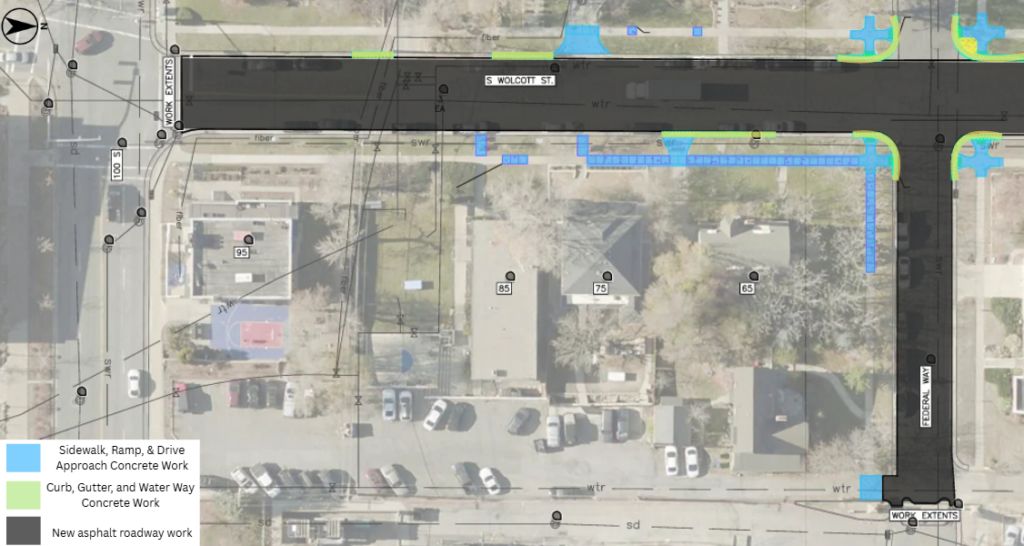
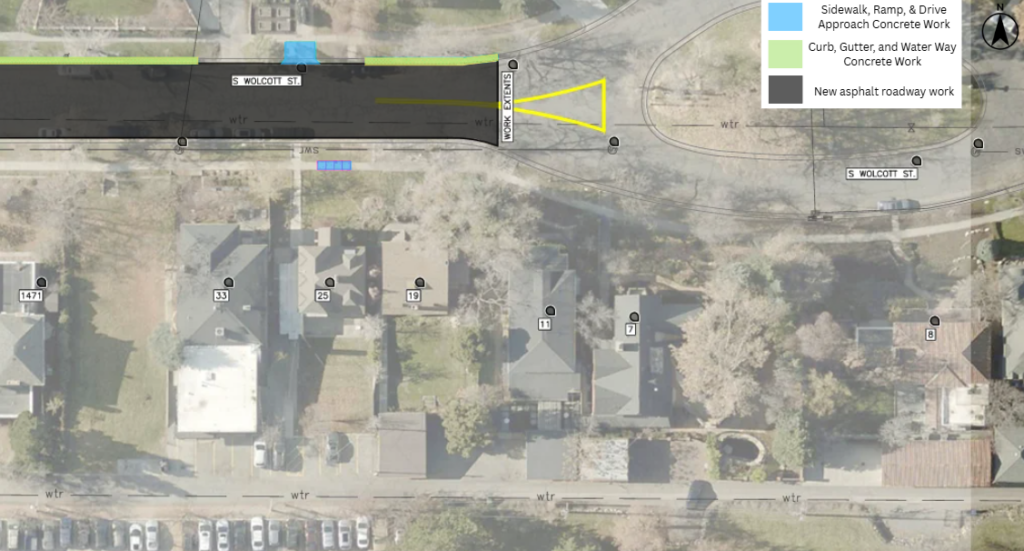
Wolcott Street Overlay (to be completed in 2027)
Location: Wolcott Street from 100 South to South Temple Street with some paving extending onto Federal Way east of Wolcott Street.
See detailed project maps below:
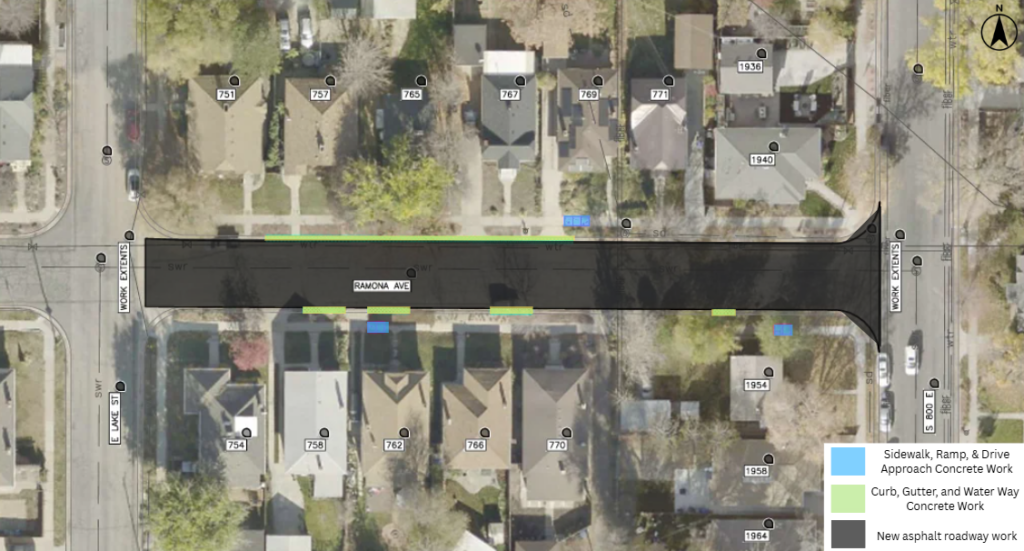
Ramona Avenue Overlay
Location: Ramona Avenue from East Lake Street to 800 East.
October 2026 Update: Concrete work is has been completed. Pavement milling and repaving is expected to happen in early October. This work will include minor access limitations while active work on the street is occurring.
See detailed project maps below:
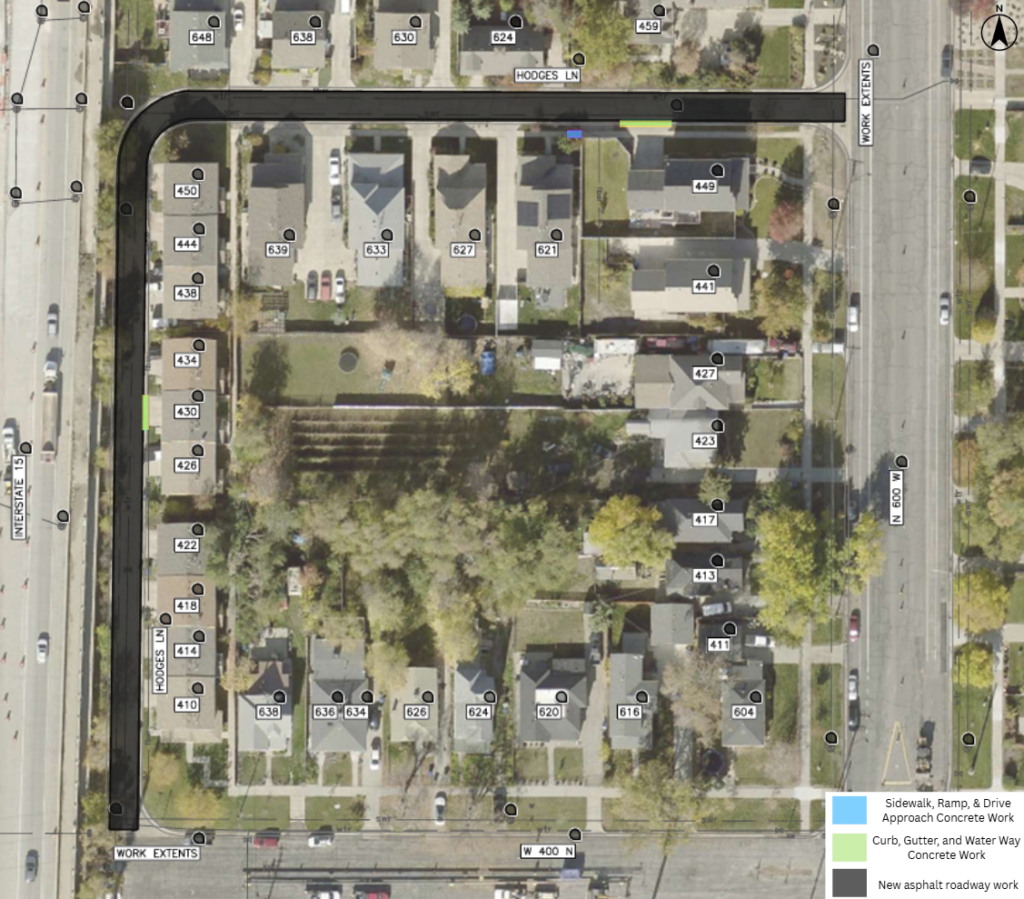
Hodges Lane Overlay
Location: Hodges Lane from 600 West to 400 North.
October 2026 Update: Concrete work is has been completed. Pavement milling and repaving is expected to happen in early October. This work will include minor access limitations while active work on the street is occurring.
See detailed project maps below:
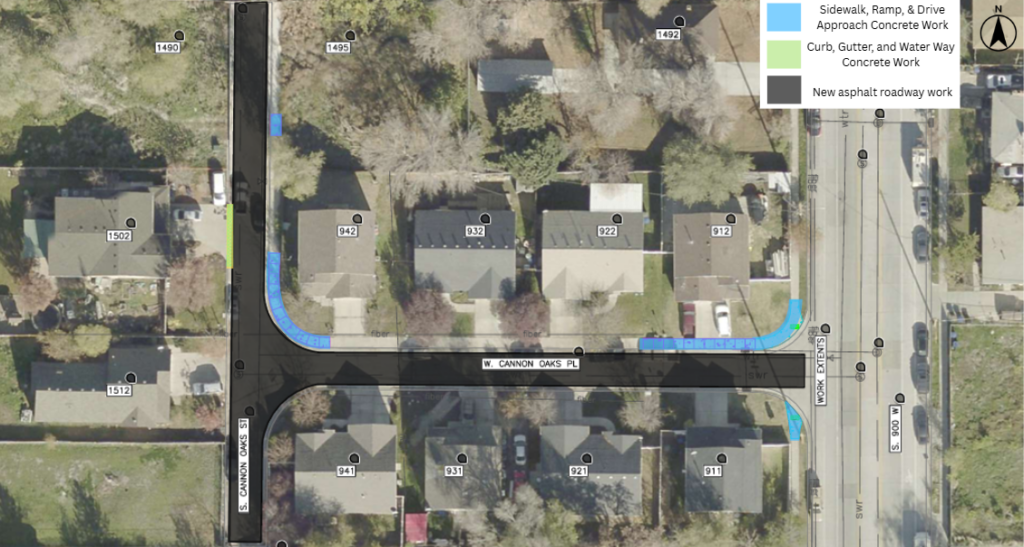
Cannon Oaks Place Overlay
Location: Cannon Oaks Place from 900 West to Cannon Oaks Street, including pavement overlay on Cannon Oaks Street.
October 2026 Update: Concrete work is has been completed. Pavement milling and repaving is expected to happen in early October. This work will include minor access limitations while active work on the street is occurring.
See detailed project maps below:
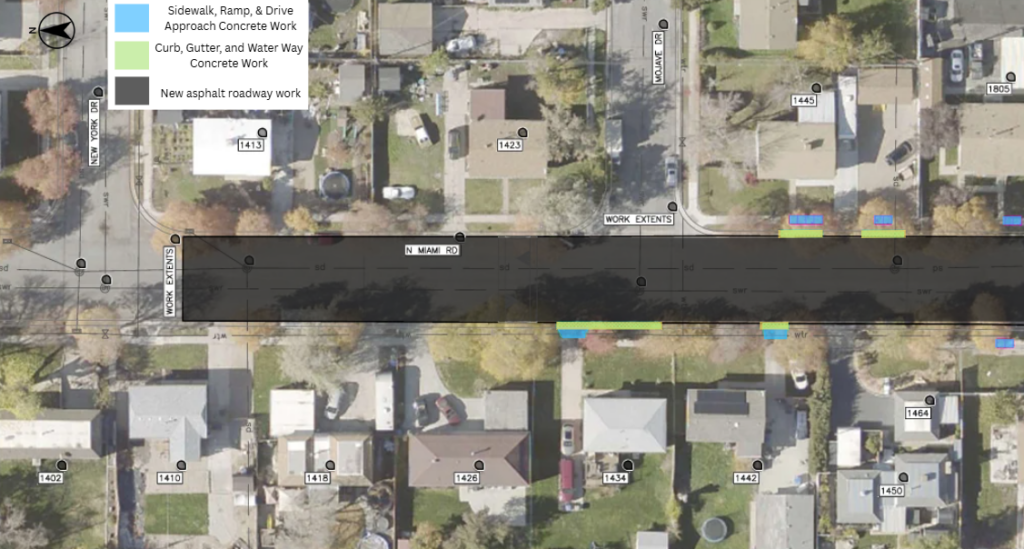
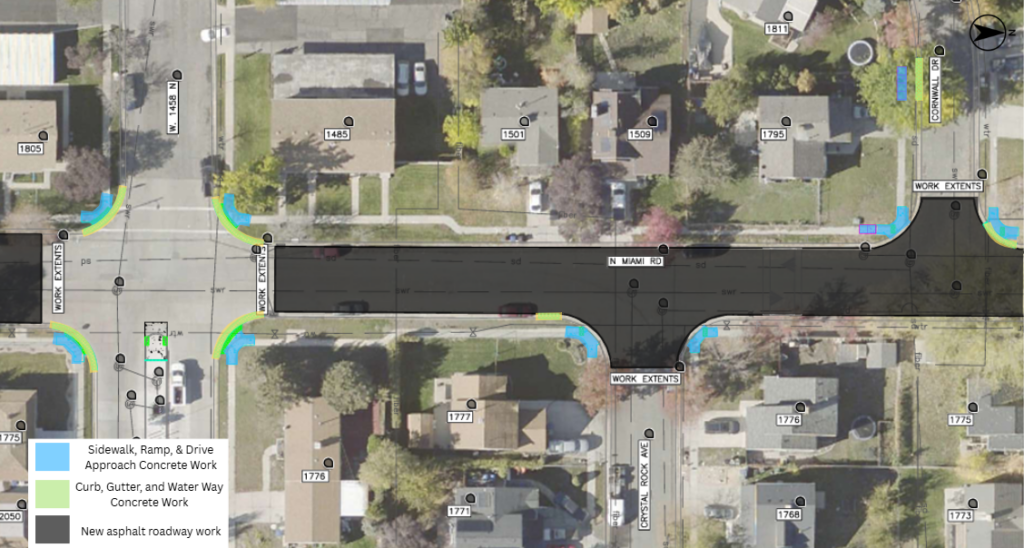
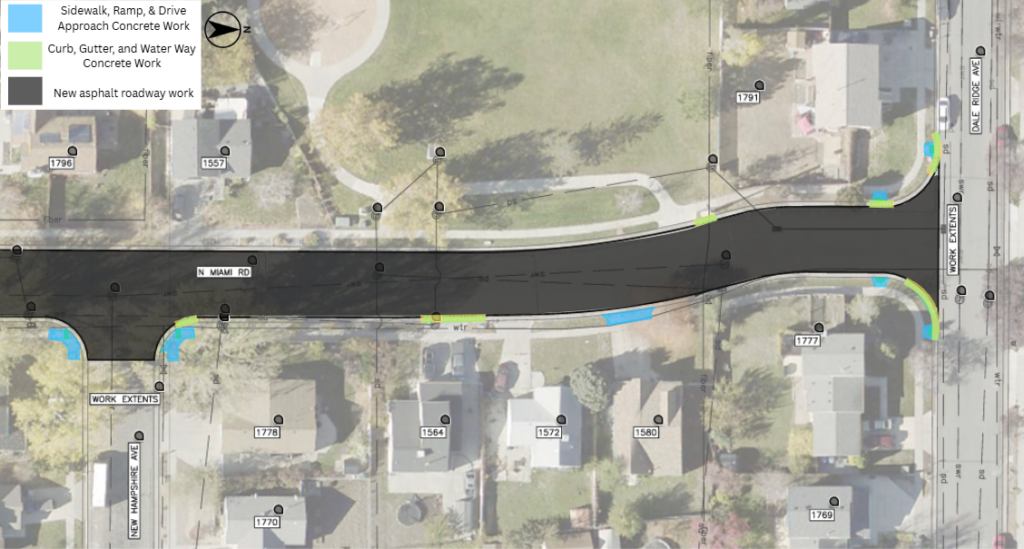
Miami Road Overlay
Location: Miami Road from New York Drive to Dale Ridge Avenue.
See detailed project maps below:
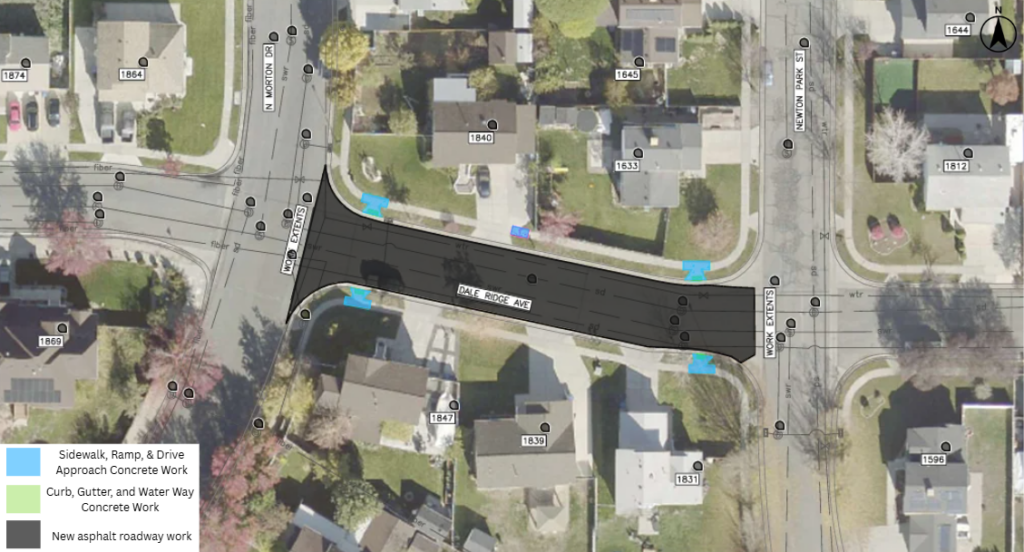
Dale Ridge Avenue Overlay
Location: Dale Ridge Avenue from Morton Drive to Newton Park Street.
See detailed project maps below:
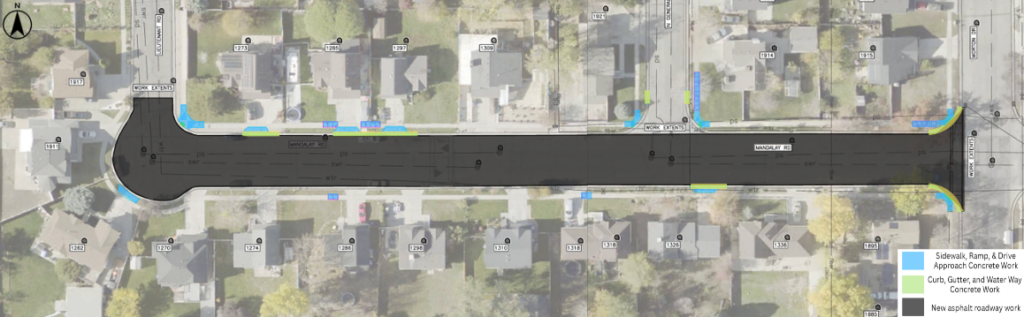
Mandalay Road Overlay
Location: Mandalay Road from Lieutenant Road to Morton Drive.
See detailed project maps below:
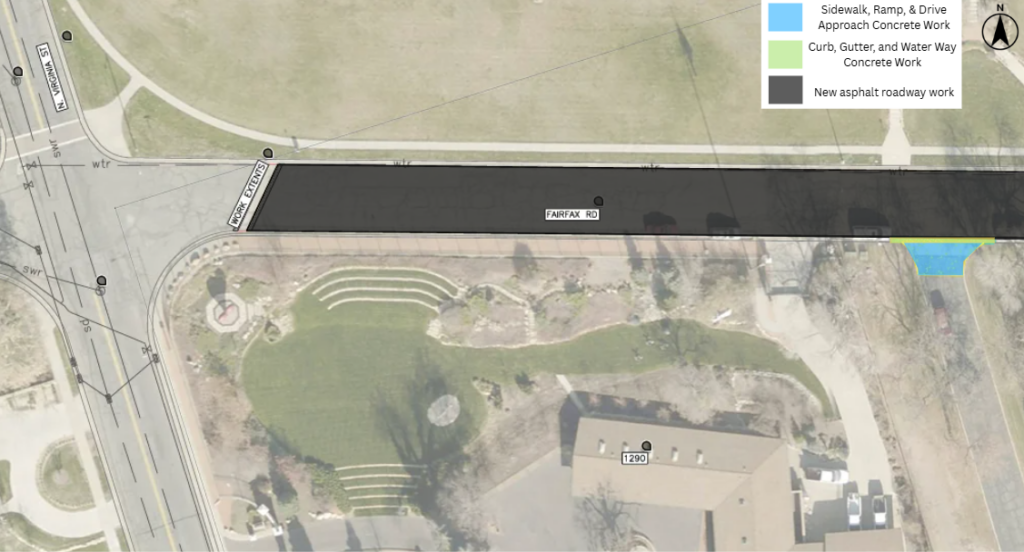
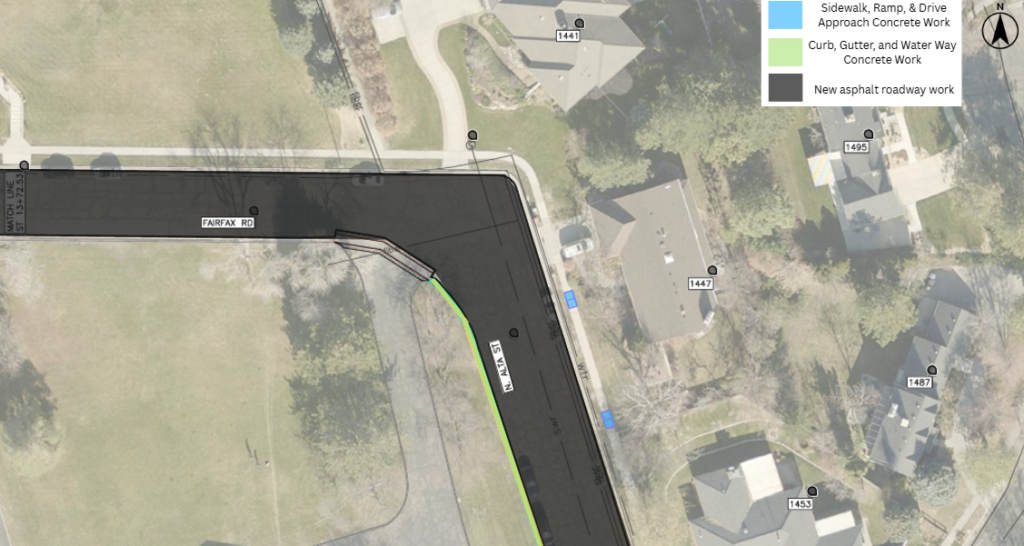
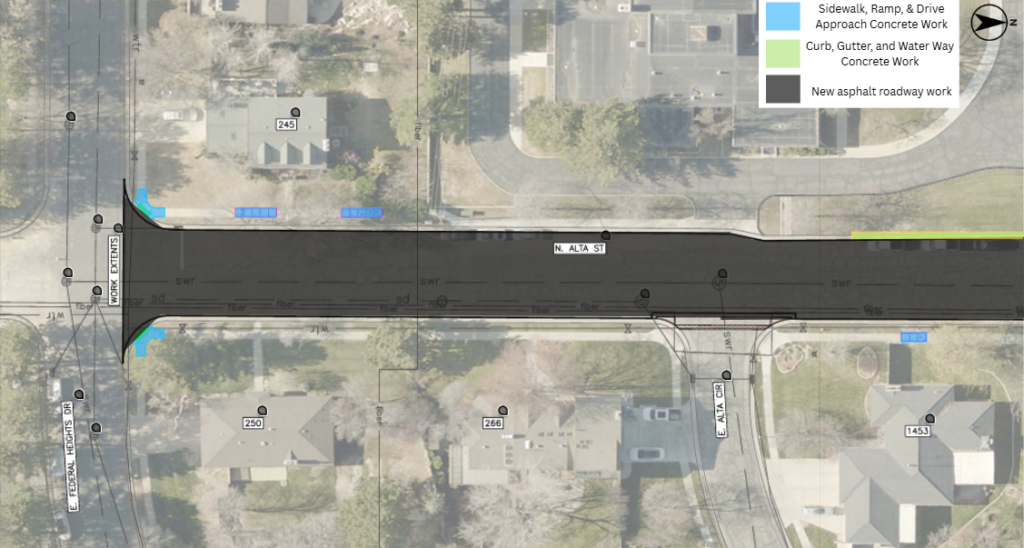
Fairfax Road & North Alta Street Overlay
Location: Fairfax Road from Virginia Street to North Alta Street, and North Alta Street from Fairfax Road to Federal Heights Drive.
October 2026 Update: Concrete work is underway and is expected to continue until the end of October. Following the concrete, pavement milling and repaving will be completed.
See detailed project maps below:
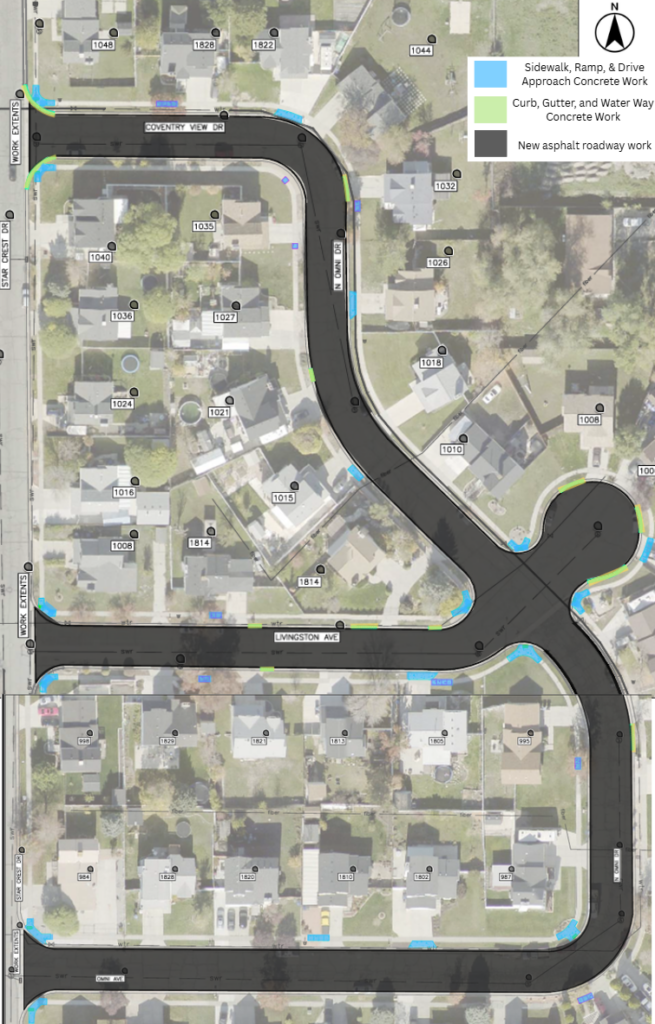
Coventry View Drive, Livingston Avenue, Omni Avenue & Omni Drive Overlay
Location: Coventry View Drive, Omni Drive, Livingston Avenue, and Omni Avenue within the neighborhood bounded by Star Crest Drive.
See detailed project maps below:
Frequently Asked Questions
What is a Pavement Overlay?
A pavement overlay is a roadway preservation treatment that extends the life of an existing street. The process begins by milling, or grinding down, several inches of the existing asphalt surface. After any necessary pavement repairs are completed, crews place a new layer of asphalt on the roadway. The new pavement provides a smoother driving surface, improves drainage, and helps protect the roadway from further deterioration, extending its service life for years to come.
How Long Will My Street Be Under Construction?
Construction on each street is expected to take approximately 4 to 5 weeks. Actual durations may vary based on weather, material availability, and other unforeseen conditions encountered during construction.
Pavement Overlays vs Street Reconstruction
Pavement overlays and street reconstructions are both used to improve roadways, but they are designed to address different levels of deterioration.
A pavement overlay is typically used on roads that are in poor condition but still have a sound underlying structure. While the pavement surface may exhibit cracking, rutting, or other signs of wear, the base layers beneath the road remain capable of supporting traffic. During an overlay project, crews remove several inches of the existing asphalt and replace it with new asphalt. This restores ride quality, improves safety, and extends the life of the roadway at a lower cost than reconstruction.
A street reconstruction is necessary when a road has reached the point of structural failure. Failed roads often experience widespread cracking, significant settlement, recurring potholes, drainage issues, or deterioration that extends beyond the pavement surface and into the underlying road base. In these cases, simply replacing the asphalt would not address the root cause of the problem. Reconstruction involves removing and rebuilding the roadway from the ground up, including the pavement structure and, in many cases, associated infrastructure such as curb and gutter, sidewalks, drainage systems, and utilities.