
Climate Forward SLC
Home Electrification

Save Money, Clean the Air, Go Electric!
Lower your energy costs while creating a healthier, more comfortable home in Salt Lake City
Switching your home appliances and vehicles to efficient electric options is one of the most effective ways to lower monthly energy costs, reduce pollutants in your home, and improve air quality across the Wasatch Front.
While certain electric options may require a higher initial investment, the combination of improved efficiency, lower energy costs, and reduced maintenance can make living an all-electric lifestyle cheaper in the long run.
Access a quick snapshot of energy costs and emissions. More details on assumptions are included below.
Clean Electric Technologies
All-electric buildings are healthier buildings and most households only need three appliances plus an electric vehicle (or two) to live an all-electric lifestyle. Check out a fact sheet about the health of electric buildings (PDF). See below for details and benefits on each appliance plus EVs.
HVAC Heat Pumps (Heating & Cooling)
What It Is: Heat pumps are essentially a two-way air conditioner that can reliably heat and cool a home in Salt Lake City. Instead of burning natural gas to create heat, a heat pump uses a refrigerant cycle to efficiently transfer heat between the outdoors and indoors. There are many different configurations of heat pumps, explained in the resources below, and a growing number of local contractors ready to install these technologies.
Learn More
Incentives
*Enbridge Energy rebates are only available for “dual-fuel” systems that retain a gas furnace as back-up heating, which may not be necessary for certain homes.
See a Four-Minute Video Overview on Heat Pumps, Explained (And Why Everyone’s Switching)
Heat Pump Water Heaters
What It Is: Heat pump water heaters pull ambient heat from surrounding air and transfer it into the water tank. These systems are 3-4 times more efficient than traditional electric resistance water heaters. Historically, heat pump water heaters required 240-volt electricity, but recent innovations have created lower voltage “plug-in” 120-volt heat pump water heaters suitable for some homes.
Learn More
Electric & Induction Cooking
What It Is: There are two ways to cook electric and cut indoor air pollution. Standard electric cooktops use smooth radiant glass or coils, while induction cooktops are a bit more efficient and responsive by using an electromagnetic field to heat the cookware directly. EPA notes that people spend 90 percent of their time indoors where some levels of pollutants can be several times worse than outdoors. Switching to electric or induction cooking eliminates fossil fuel combustion inside kitchens. Portable induction cooktops are also a good option for renters or a quick fix to stop burning gas in your living space.
Learn More
Electric Vehicles (EVs)
What It Is: EVs run purely on electricity, so they eliminate tailpipe emissions, oil changes, and expensive trips to the gas station. These vehicles commonly have over 250 miles of range and most households can use a simple 120-volt outlet for charging at home, which can deliver over 40 miles of driving range per overnight charge. Explore the resources below for information on EV charging, cost savings, vehicle options, and more.
Learn More
Bonus Solution – Electrified Landscaping
Electrifying your lawncare and landscaping equipment helps local air quality. According to the Utah Division of Air Quality, using a gas-powered leaf blower for one hour is the same as driving the average vehicle 727 miles! Replace gas-powered equipment with all-electric options to cut pollution.
Additional Tips and Benefits
Plan Your Purchase – Don’t Wait for an Emergency
When a home furnace, water heater, or stove breaks down, homeowners find themselves in a bind and buy whatever standard gas model is in stock and immediately available. Replacing equipment like this in an emergency locks your home into fossil fuels and potentially higher energy bills for the next 10 to 20 years. By planning ahead and exploring electric options before an emergency occurs, you will be ready to upgrade to a clean electric system when the time comes.
A Cleaner Electric Grid
Utah’s power grid is steadily getting cleaner, which cuts emissions and makes switching to electric technologies even more beneficial.
The Community Clean Energy Program will launch in Salt Lake City and other Utah communities in 2027. This effort aims to provide net-100% renewable electricity for participating customers. By staying enrolled in this program, you will help increase the supply of clean energy to power your electric home appliances and vehicles.
Protecting Wasatch Front Air Quality
Our unique geography along the Wasatch Front traps air pollution near the valley floor during winter inversions, while summer heat and sunlight create ground level ozone during warmer seasons.
Mobile sources like cars and trucks plus area sources such as fossil fuel home heating and appliances create a significant amount of air pollution according to the State of Utah. Replacing gas vehicles with EVs and swapping gas furnaces and other appliances with electric options such as heat pumps helps reduce emissions.
Active Transportation & Public Transit
Choosing active transportation options and transit is one of the best ways to keep our air clean while cutting your energy costs! The UCAIR “What You Can Do” page includes resources and tips to help you plan your commute and other transportation needs.
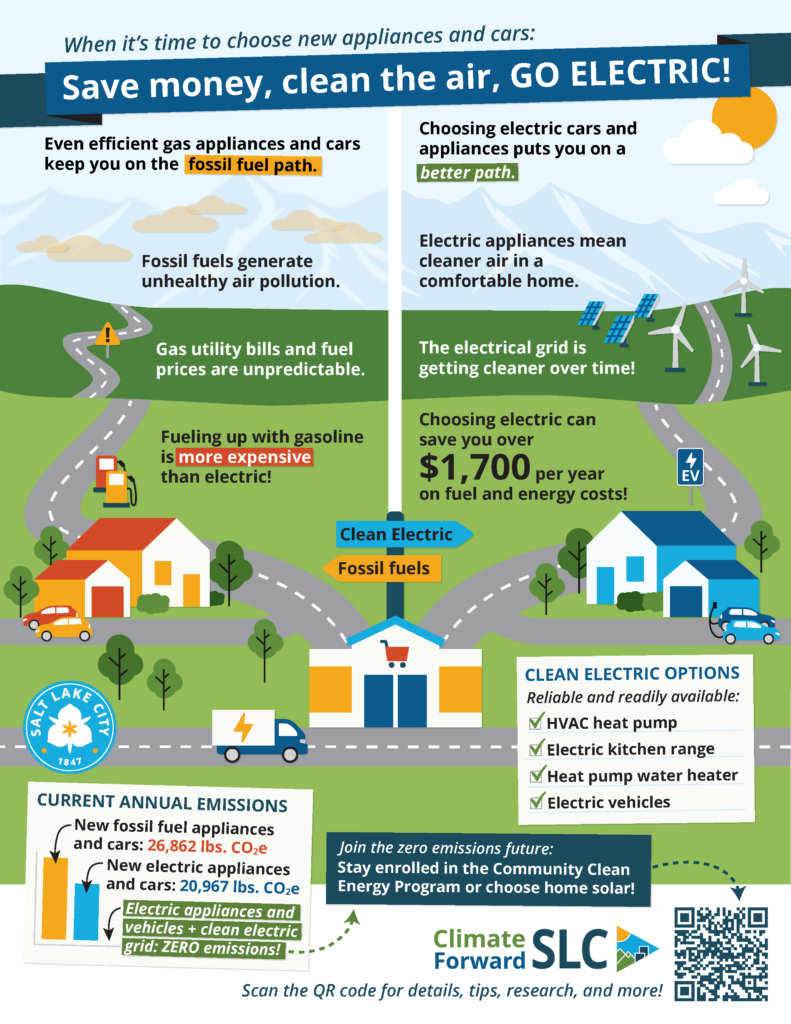
Cost Savings and Assumptions: Understanding the Infographic
Analysis and Assumptions
The Salt Lake City Sustainability Department analyzed costs and emissions impacts of going all-electric with efficient appliance and vehicles. This analysis leveraged the RMI Green Upgrade Calculator to evaluate a hypothetical 1,500 – 2,000 square foot single-family home in Salt Lake City. The analysis considered two pathways, either going all-electric or using fossil fuels, and assumed new and efficient equipment and vehicles for both choices.
Current residential electricity and natural gas utility rates for Rocky Mountain Power and Enbridge Gas were used for the analysis along with greenhouse gas (GHG) emission factors for the PacifiCorp electric grid plus direct combustion of fossil fuels. Gasoline was assumed to cost $3.30 per gallon, although prices at the time of the analysis in 2026 were notably higher. The household was assumed to own two vehicles, one sedan and one crossover, that each travel 12,000 miles per year.
Emissions Impacts
The all-electric household, including both appliances and two vehicles, produced 22% fewer GHG emissions in the first year while contributing zero direct emissions to the local airshed due to lack of gas combustion appliances and vehicles. The GHG emissions advantage should increase over time as the electric grid becomes cleaner. Households can accelerate this outcome by participating in the Community Clean Energy Program and/or installing solar panels on your home.
Financial Impacts
The all-electric household analyzed saves $1,729 in energy utility and vehicle fuel costs in the first year relative to relying on natural gas appliances and gasoline vehicles. The vast majority of these savings are related to vehicle fuel savings, although the all-electric home was estimated to save $22 per year in utility costs relative to efficient gas appliances for heating, water heating, and cooking.
Retrofitting a home to have efficient all-electric equipment, plus purchasing EVs, may incur a cost premium relative to purchasing natural gas and gasoline counterparts. However, this cost differential has been shrinking over time and our analysis of 12-year lifecycle costs, including both the purchase price and ongoing energy and utility expenses, revealed an overall savings of over $2,700 for the household that invests in all-electric options. This lifecycle cost analysis held utility rates and fuel prices constant over time, but gas rates have proven to be more volatile than electricity prices over time, so savings and price stability for the all-electric household could be even greater.
EPRI, an independent non-profit research organization, has similarly evaluated the financial impacts of households electrifying over time. They released an analysis in 2025 that forecasted a decline in per household energy costs as a result of electrification. In their analysis, “EV adoption drives down gasoline expenditure everywhere [in the U.S.], which generates savings for household energy costs despite increased electricity expenditure.”
Your Actual Savings
Financial and emissions impacts for each household will vary depending on appliance and vehicle choices plus use patterns and specific details of your home. The RMI Green Upgrade Calculator is a helpful tool for evaluating utility bill impacts and this Vehicle Cost Calculator from the U.S. Department of Energy compares fuel versus electricity costs for gasoline vehicles relative to all-electric alternatives. The Rocky Mountain Power Wattsmart website includes a Find a Contractor page listing HVAC and other service providers in Utah that are part of their network.