
Budget Basics
Fiscal Year 2027 (July 1, 2026 – June 30, 2027)
— Quick Links —
Mayor’s Recommended Budget
In May, Mayor Mendenhall presented the recommended budget to the City Council. Since then, the Council has formally adopted the City’s $2.1 billion Fiscal Year 2026-27 budget.
The adopted budget focuses on the basics that matter most to residents—safe neighborhoods, well-maintained parks, youth programs, reliable infrastructure, and a strong local economy. Before proposing any new investments, the administration worked to reduce costs and run City operations as efficiently as possible. The Mayor’s recommended FY27 General Fund budget was created to:
- Invests in public safety, emergency response, and core community services
- Reduces or streamlines positions and programs where possible
- Proposes updates to the City’s portion of property tax, along with adjustments to waste and recycling and public utility rates
Budget Efficiencies
Months ago, when the budget process began every City department was asked to identify savings. Together, these efforts reduced spending by $13.2 million. Some examples include:
- Holding vacant positions longer to reduce costs
- Reducing or eliminating outside consulting contracts and doing more work in-house
- Ending programs with low participation
- Cutting operating expenses (travel, supplies, tools, utilities, etc.)
- Reducing subsidies
Frequently Asked Questions
Where has the City made efficiencies? Seeing the demands on local households right now, the administration tasked the City to tighten its belt and find more efficiencies, which resulted in $13.2 million in savings for this budget. Some examples include:
- A hiring freeze that went into effect in January 2026
- $6.6 million in estimated vacancy savings from the current fiscal year, which will go toward costs in FY27
- $3 million in additional vacancy savings is anticipated from open positions in FY27, including $715K in the police department
- $1.3 million cut to the Golf subsidy due to record revenue
- $1 million from streamlining Urban Services cleaning contracts
- $622K trimmed in Public Lands service costs, like reducing special projects, some events, and tree pruning
- $375K reduction in Mayor’s Office operations
- $350K from 911 communications upgrades now funded by the state
- Ending HIVE Pass subsidization due to low participation and increasing costs
- Reduction to some Arts Council programming like Busker Fest
- Increased use of volunteers in Public Lands to bring events to the public
Where is the City seeing increased demand? The city is growing and so has demand for some services and costs. For example:
- Higher public safety demand, including at Fire Station #3 in Sugar House in order to respond to more residents and taller buildings
- Inflation in basic services
- Staffing for critical public‑facing programs, like diversion programs in Justice Courts where caseloads have grown significantly, and permit inspections.
How has inflation impacted the budget? The key measure of U.S. inflation has jumped 3.5%, the biggest increase in almost three years, according to the Commerce Department in April 2026.Like many households, the City has also seen the cost for materials rise since 2020. For example:
- The City uses millions of dollars in fuel annually; we project a $2 million increase in fuel for our fleet this year alone.
- New traffic signals for an intersection cost $250,000 in 2020 and now they cost more than $500,000.
- A full set of firefighter gear that cost about $3,800 in 2020. Now it runs almost $900 more per person.
- Asphalt to fill potholes cost about $44 a ton in 2020 and now cost $64 per ton–nearly a 50% jump in price.
- Salt Lake City employee health insurance premiums increased by 10% this year
In recent years, we’ve done what we can to deliver more services despite increased costs. But now in our FY2027 Proposed Budget, we must account for these higher costs to be fiscally responsible and balance the budget.
What is the City doing to address affordability? Affordability is a constant, pressing issue that weighs on many communities in Utah, including Salt Lake City. A shortage of housing and the cost of materials to build new housing has caused costs to rise. Federal policies have caused the prices of gas and other goods to increase. While much is beyond the City’s control, we are using the tools we have to improve affordability in a number of different ways:
Affordable Housing:
- Fund construction of deed-restricted and family-sized affordable housing
- Preserve existing affordable housing through financing for critical repairs
- Rezone to allow more housing types and improve affordability
- Fund services that help people secure and keep housing, such as financial counseling, down payment assistance, and rental support
Affordable Transportation:
- Fund westside on-demand transit service
- Provide transit passes for all Salt Lake City School District students (plus a parent/guardian), faculty, and staff
- Expanded bus service hours and increase frequency on key GO Routes for more reliable, lower-cost transit
- Invest in active transportation paths to make getting around without a car easier
Affordable out-of-school care: Provide high quality and affordable care through YouthCity
Free Resources: Offering free access to technology and digital services at Sorenson Community Campus and libraries
Fresh Food: Funding neighborhood and household production of fresh, healthy, affordable, and culturally relevant food through microgrants
Capital Improvement Projects
Salt Lake City’s Capital Improvement Program (CIP) is a multi-year planning program of capital expenditures needed to replace or expand the City’s public infrastructure.
On Aug. 25, the Council allocated $34.88 million to 25 projects citywide for the Fiscal Year 2026-27 (FY27) CIP. View our overview handout or see the map for details on how the funding was distributed.
City Facilities
$2,817,5000
Parks & Public Spaces
$12,738,000

Transportation Repairs & Enhancements
$19,330,500
Tax Proposals
Property Tax Proposal
Just like your household, Salt Lake City is experiencing higher costs for things like fuel, materials, and services. At the same time, demand for core services continues to grow. Before proposing a property tax increase, the City reduced spending by $13.2 million and explored other revenue options to keep the increase as low as possible.
For an average home valued at $703,000, the increase is about $8.35 per month on the City’s portion of your property tax bill. Residents typically see the increase on their bill in fall 2026 when Salt Lake County sends out property tax bills.
If you have questions about your property tax bill or how it’s assessed, please contact Salt Lake County.
This applies only to Salt Lake City’s share—not your full property tax bill, which includes multiple taxing entities like the school district and the county. If adopted, it would appear on property tax bills this fall.
What will the property tax fund?
What it will pay for:
- Capital Improvement Projects: Vision Zero safety improvements, facilities replacement and renewal, Sugar House Park waterline replacement, Washington Park septic expansion, urban trails, Jordan Park sewer improvements, more bike racks, and additional street reconstruction.
- Maintenance and repair of City vehicles
- Wildfire risk reduction and maintenance of 23 new amenities across properties, parks, and public lands
- Criminal justice efforts, including staffing for legal defenders, prosecutors, and Justice Court teams—funded in coordination to ensure these interdependent systems function effectively together
- Continued Youth and Family programs using local funding following the loss of grants
- Support for the Public Utility Bill Public Assistance Program
- City’s Environment & Energy Division
- Lighting maintenance in parks and public spaces
- Supplies and equipment for the Police Department
Frequently Asked Questions
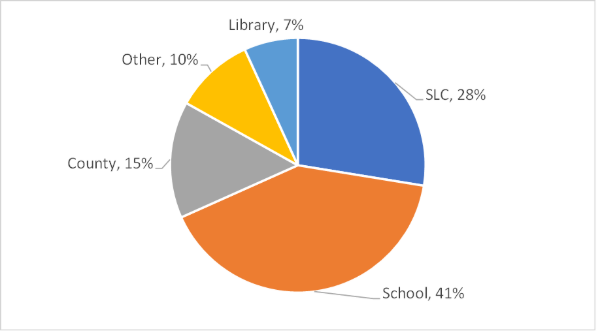
Does this apply to my entire property tax bill? No. This increase only applies to Salt Lake City’s portion of your property tax bill. Other taxing entities, like Salt Lake City School District and Salt Lake County, set their own rates. Only about 28% of property taxes collected go to the City, with the largest majority to education.
What did the City do to minimize a property tax increase? The City used as many tools as it could in this budget to reduce the amount needed from a property tax increase, including sourcing other revenue and making efficiencies that are also outlined in this FAQ.
Didn’t Salt Lake City propose a property tax increase last year? No, Salt Lake City has not proposed a property tax increase beyond stabilization since 2022. In December 2025, the County Council, which is a separate entity, approved a county property tax increase of 14.65%. Your property tax bill is made up of multiple service providers, from Salt Lake City School District and Salt Lake County Government to the Mosquito Abatement District and Salt Lake City.
My home’s value has gone up, haven’t property taxes automatically risen with that? In Utah, rising home values don’t automatically mean higher property tax bills. Property taxes in Utah are calculated to produce a certain amount of revenue every year, instead of using a fixed tax rate.
Local taxing entities (like Salt Lake County, Salt Lake City, and Salt Lake City School District) are required to collect roughly the same amount of revenue as the year before from existing properties. Because of this, when property values go up, tax rates are adjusted downward to keep revenue levels constant. When a taxing entity needs to collect more than the prior year’s revenue, we’re required by Utah law to hold a public hearing before it takes effect and vote to approve this increase.
Utility & Waste Rate Updates
On July 1, 2026, Salt Lake City implemented rate increases for water, sewer, stormwater, street lighting, and curbside waste and recycling pickup.
Public Utilities
Service rates pay for daily operations, maintenance, meeting state and federal regulations, and replacing aging infrastructure over time—some of which is more than a century old. While many upgrades are needed, not all can be completed or funded at once. Public Utilities carefully prioritizes investments each year to balance necessary generational improvements with the impact of rate increases.
The rate increase for water, sewer, stormwater, and street lighting varies by customer, as rates are based on how people use the system. To identify the impact to your household, customers can use Public Utilities’ rate calculator.
Waste & Recycling
The City provides weekly garbage, recycling, and compost collection for about 42,000 households. Costs for this service continue to rise due to inflation and equipment needs. The latest rate increase helps the City keep up with these costs, provide reliable service, and maintain a reserve fund so services can continue during emergencies.