Advancing climate resilience, environmental health, and equity.
Parks
Expanded use of electric and low-emission maintenance equipment.
Upgraded irrigation controllers and transitioned to low-water landscaping in multiple parks.
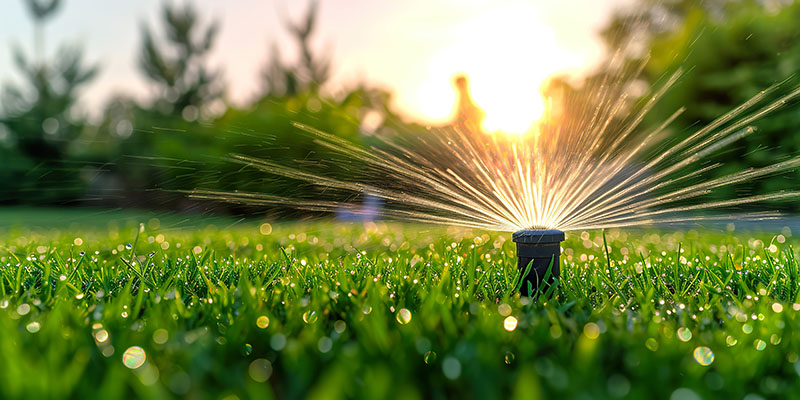
Implemented point irrigation systems to reduce overspray and water waste.
Planning and Design
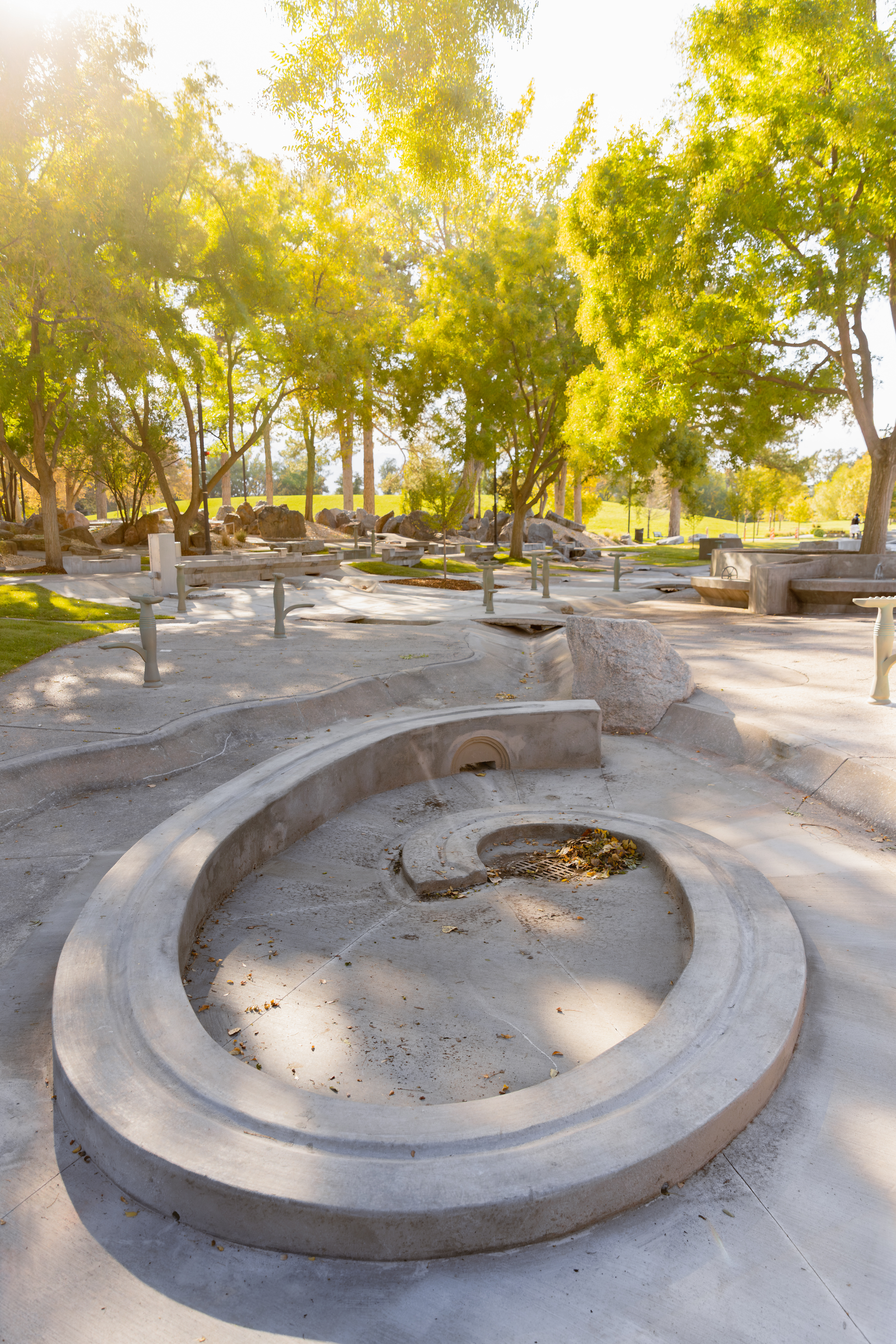
Reopened Seven Canyons Refuge with water-saving design and enhanced educational features.
Opened Glendale Park Phase 1, which will be Utah’s first SITES-certified park, featuring stormwater retention and native landscaping.
Secured $1M for Liberty Park lake dredging and aeration improvements, which will improve irrigation efficiency, water quality, and reduce algal bloom risks.
Updated the Public Lands Needs Assessment to guide equitable, data-driven investment.
Provided sustainability leadership on the City’s Sustainable Infrastructure Committee.
Trails and Natural Lands
Increased the capacity of the Native Plants Program for improved communication and efficiency.
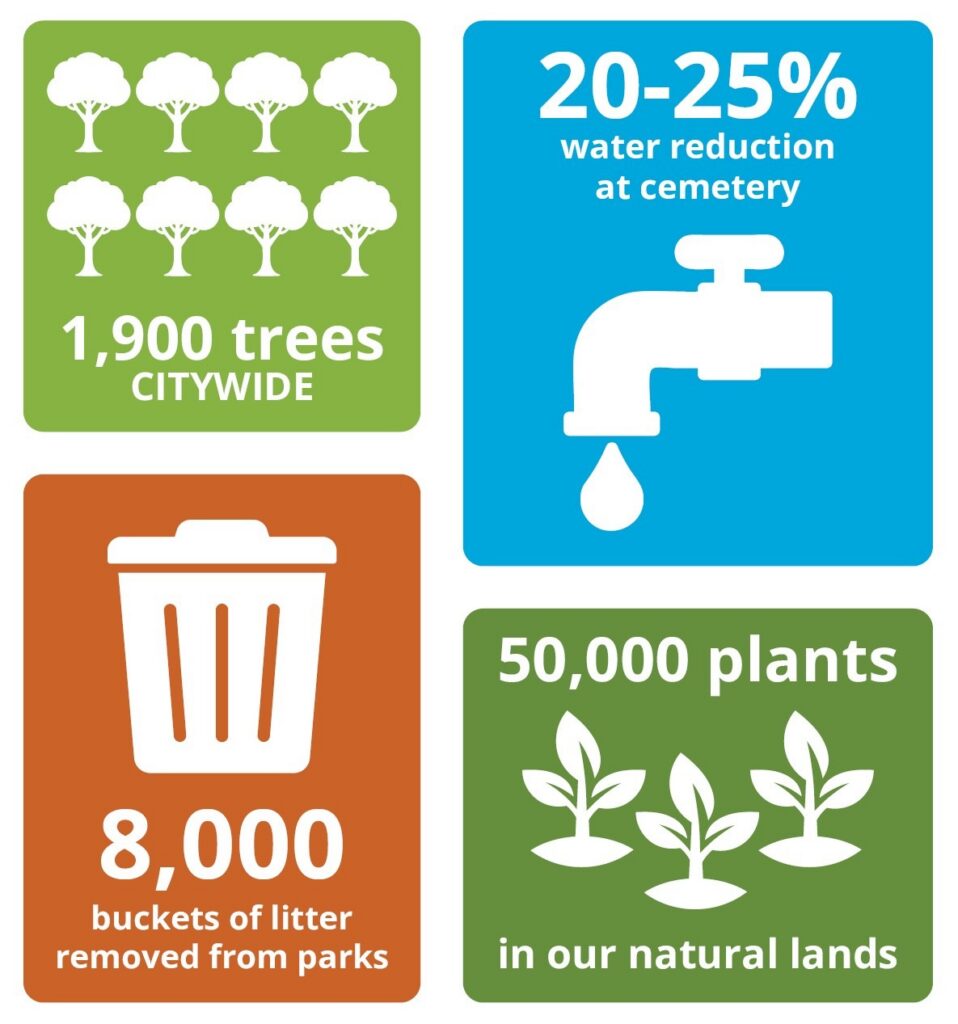
Improved environmental health and increased biodiversity by adding more than 50,000 plants at Foothills trailheads, Cornell Wetlands, Glendale Park, and many other natural areas.
Completed development of the Genesee Native Seed Farm at a neglected space within 900 South River Park.
Finalized an agreement with the Utah State Department of Corrections to use their greenhouse for plant production needs and conduct skill training.
Partnered with state agencies to take the lead on the management of Jordan River Water Trail vegetation maintenance.
Urban Forestry
Planted more than 1,900 trees citywide – with more than half on the West Side for the fifth consecutive year – ensuring new tree planting outpaces tree removal in the City.
Conducted targeted pruning to improve safety and tree health.
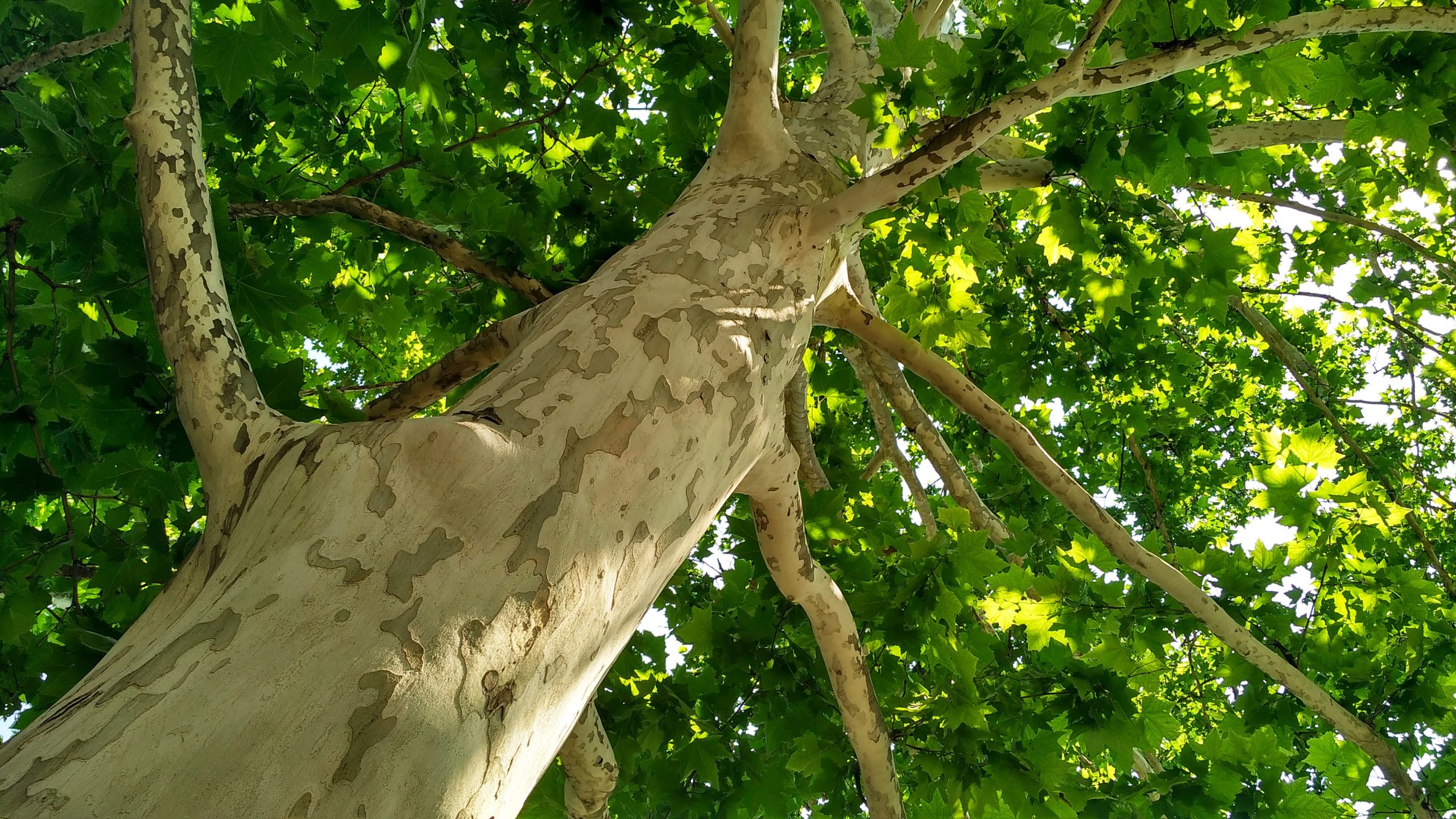
Treated 640 trees for anthracnose, sycamore scale, and plant bug infestations.
Pruned nearly 6,000 trees through city crews and contractors.
Golf
Developed turf reduction plans at all six golf courses to reduce irrigation demand.
Upgraded golf cart fleets at Nibley Park with lower-emission, fuel-efficient models.
Cemetery
Installed a high-efficiency irrigation system in the Northeast Quadrant, reducing water use by 20–25 percent.
Utilized weather-based central irrigation controls to optimize watering.
Designed new roadways to direct stormwater appropriately.
Regional Athletic Complex
Optimized irrigation practices and introduced water-saving wetting agents.
Continued establishment and care of hundreds of newly planted trees.
Removed invasive species and restored native vegetation in retention ponds.
Evaluated autonomous mower technologies to improve operational efficiency.
Events
Implemented sustainable event practices such as reducing single-use materials, improving waste sorting, and turf protection.
Expanded high-quality programming in equity-priority neighborhoods.
Park Rangers
Removed thousands of hazardous materials and nearly 8,000 buckets of litter.
Partnered with the stewardship team on habitat restoration, planting projects, and cleanup events.
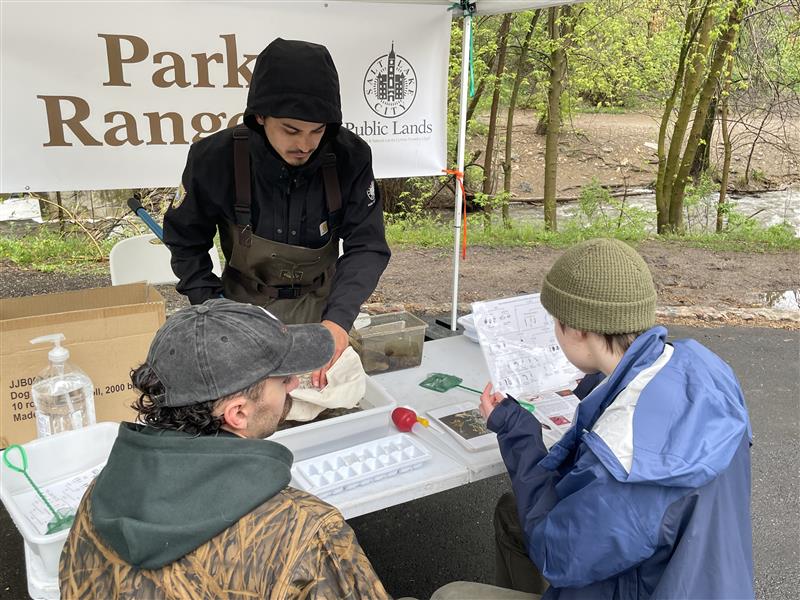
Delivered educational programs focused on biodiversity, wildlife health, and ecological stewardship.
Engaged with more than 2,000 program participants in conversations about conservation practices.
Embedded environmental stewardship into daily patrol operations.