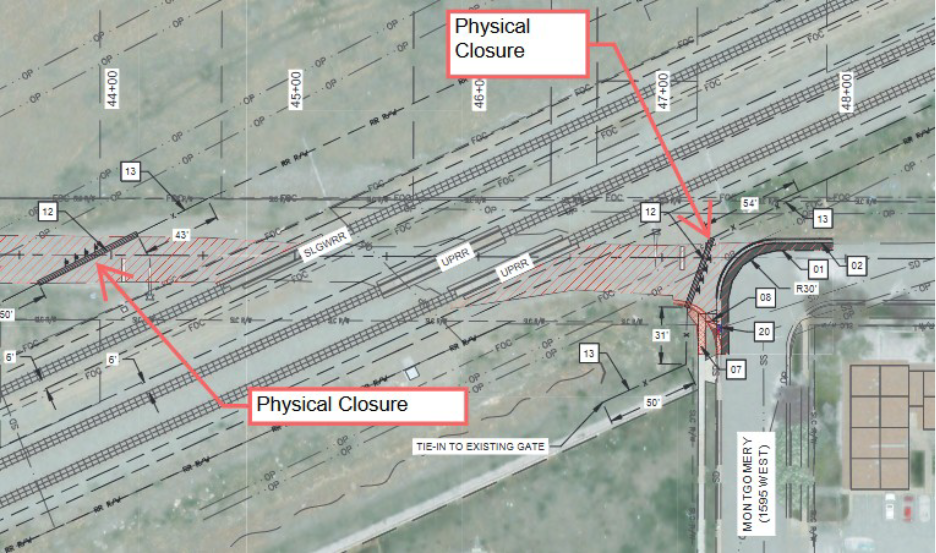
The Council is considering closing a portion of 200 S between Montgomery Street (1595 W) and 1640 W. as part of creating a new Railroad Quiet Zone.
On Tuesday, April 7, the Council will be briefed on the proposed closure. Access meeting information and agendas.
Feedback may be shared anytime by emailing [email protected], calling 801-535-7654, or submitting your comments online.
The Proposed Closure
The City is working with the Federal Railroad Administration on safety improvements needed to create a new railroad quiet zone. During this process, the City identified several challenges to installing the required safety improvements:
- The tracks cross the road at a sharp angle, making improvements hard to install.
- The rail elevations would need major adjustments over a large distance.
- Limited visibility.
Because of these problems, closing the street costs much less than making the safety upgrades needed to keep the street open in a quiet zone.
According to staff, the closure follows state law, which allows streets to be closed indefinitely if they are not needed for travel, if closing protects nearby land, or if it improves safety.
The closure would consist of:
- Barricades, fencing, and signage on both sides of the tracks
- New curb & gutter at Montgomery Street so traffic can still flow south and east
- A 96-foot turnaround on the west side of the tracks
The nearby property owners have been notified and support the closure. They will still have access to their properties from the right-of-way.
What is a Railroad Quiet Zone?
A Quiet Zone is a section of a railroad line where train horns are not regularly sounded at crossings. However, train horns can still be used in emergencies or to comply with other Federal regulations or railroad operating rules. To keep a quiet zone in effect, all crossings within the zone must meet specific safety requirements, such as flashing lights and gates. Because train horns are used to reduce the risk of collisions, these safety measures are crucial for maintaining the same level of safety in the absence of a horn.
Resources
Explore more: