Salt Lake City Department of Public Utilities (SLCDPU) plans to install a series of fuel breaks in City Creek Canyon to protect the upper watershed and the water treatment plant from wildfires that could spread from nearby urban areas.
Project Overview
Wildfires across the West are becoming a greater threat to public safety, municipal water supplies, and the systems that treat and deliver drinking water.
Because City Creek Canyon is close to urban areas, it is more vulnerable to wildfires. As a result, SLCDPU plans to create a series of fuel breaks along the ridges and the main canyon road in order to reduce wildfire threats. A fuel break is an area where vegetation that can easily burn is removed or reduced to slow down or stop a wildfire from spreading.
These fuel breaks will help slow down wildfires, giving firefighters more time to respond and providing safer, more secure areas from which to fight the fire. The fuel breaks will also help protect canyon users and nearby communities, the upper canyon and its drinking water source, the water treatment plant and its staff, and the quality of the City’s drinking water.
The project includes several types of fuel treatments. The first type is a shaded fuel break along the main canyon road. Debris from the roadside fuel break will be removed from the canyon. The second type is a ridgeline fuel break which will occur on south ridge spurs. The debris resulting from the creation of these fuel breaks will be cut and piled for burning one to two years later. The third type is lop and scatter (selectively cutting and scattering small trees along the forest floor to decompose), which will occur on the south ridgeline.
This approach was recommended as the first step in protecting the canyon by wildfire and fuels reduction experts with the Uinta-Wasatch-Cache National Forest (UWCNF). The project itself will take place on land managed by both the UWCNF and SLCDPU.
Project Map
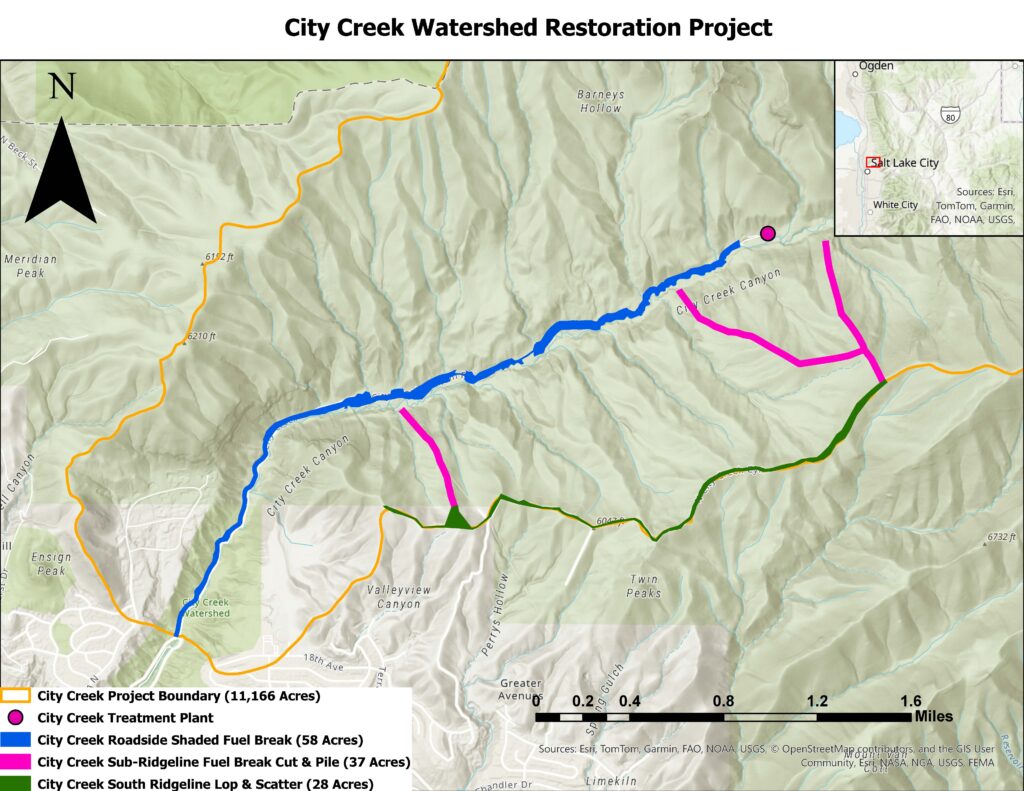
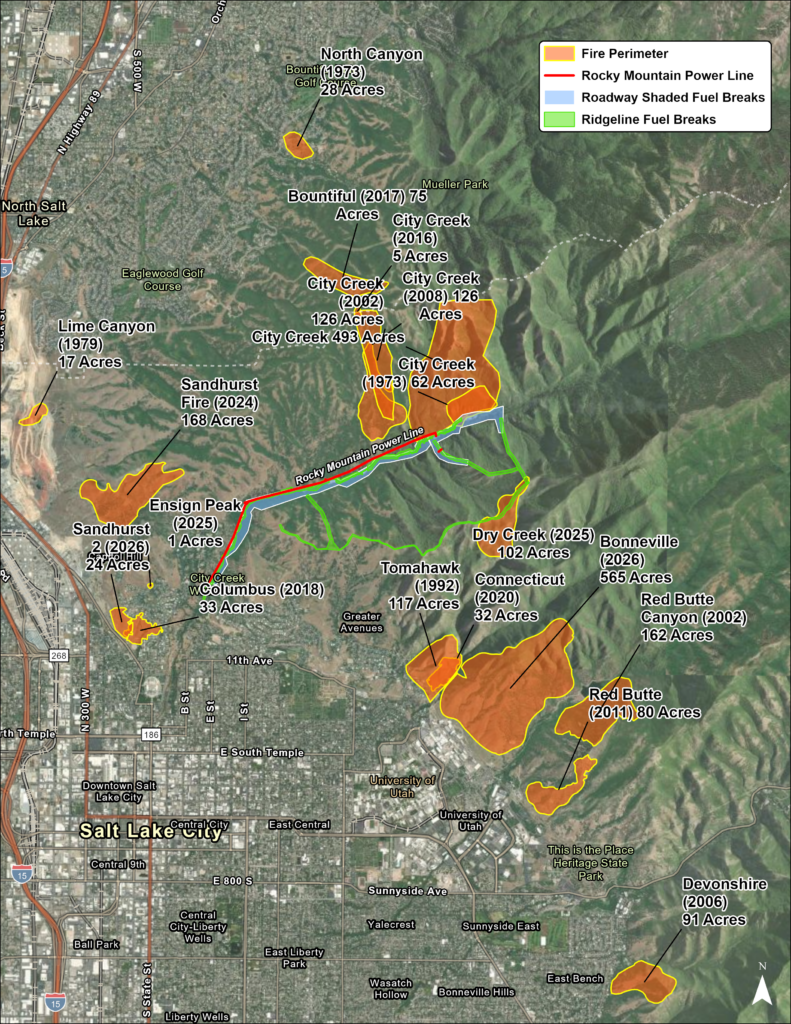
City Creek Canyon has been prone to wildfires over the years. The 2024 Sandhurst fire, the 2025 Dry Creek 2 fire, the 2026 Sandhurst 2 fire, the 2026 Bonneville Fire, the 2017 Bountiful Fire, and 2008 City Creek fires have all been close calls. Of these, the only fire to enter the canyon was in 2008. Fortunately, none of the wildfires have reached the upper canyon, which could devastate part of the City’s drinking water supply.
After the Wasatch Front’s warmest and lowest snowfall winter (2025/2026) on record, the need to protect source water areas from catastrophic wildfires has never been greater. Catastrophic wildfires generally render surface water supplies unusable. They alter the water chemistry, raise sediment levels, and create source water that is untreatable.
The planned efforts in City Creek are part of a collaborative regionwide approach involving the UWCNF, the Utah Division of Forestry, Fire and State Lands, the Utah Division of Wildlife Resources, the Salt Lake City Fire Department, SLCDPU and various nonprofit partners. This project is funded by the Watershed Restoration Initiative and SLCDPU.
Historical Wildfires near City Creek Canyon
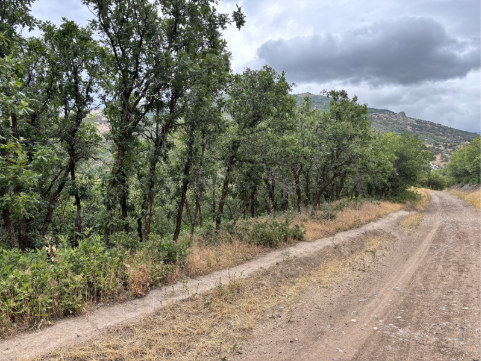
Will there be impacts to trail access? The Bonneville Shoreline Trail and City Creek Trail above Bonneville Boulevard will see some impacts. When crews are working closer to the trails, trail users can expect delays and intermittent closures. The lower section of the Bonneville Shoreline Trail and the City Creek Trail will have intermittent trail closures as needed to safely remove trees. If you would like to receive text updates about trail access, please text “CCWTP” to 833-271-7589 to opt-in to text message updates. What is the anticipated project timeline? Work is expected to begin in early 2027. The shaded fuel breaks, ridgeline fuel breaks, and debris removal are proposed to take place from January to March 2027. Cutting will not take place if snow is present or during bird nesting season. Pile burning of ridgeline fuel breaks is proposed for late fall 2027 through early winter 2028. What environmental analysis has been completed? Public Utilities contracted with SWCA consultants, who completed cultural resources and flora and fauna reviews. What work will need to happen in the future to maintain these wildfire fuel treatments? Forest restoration treatments are typically conducted over several years to build wildfire resilience. Most of this treatment will be on Gambel Oak. Crews may need to cut regrowth every two to four years. Crews will also maintain the ridgeline fuel breaks at a similar interval. What does a shaded fuel break look like? This is an example of a shaded fuel break installed at Corner Canyon in Draper a few years ago. How is the project funded? This project is jointly funded by the Utah Watershed Restoration Initiative and Salt Lake City Department of Public Utilities. How will the debris that is created from the ridgeline fuel breaks be removed? Public Utilities considered a variety of options for debris removal. Since there are limited roads and trails in this area, the debris will be cut, piled, and burned. The debris piles need time to cure and dry out. The City will work with the Uinta-Wasatch-Cache National Forest as most of the piles will be located on USFS managed lands. The piles will be burned in late fall 2027 or early winter 2028, as weather conditions allow. To minimize smoke impacts on air quality, piles will only be burned with the proper clearing indices and weather patterns. How does the project impact the reconstruction of the City Creek Water Treatment Plant? This project is being closely coordinated with the construction of the new City Creek Water Treatment Plant. We aim to complete the project while the main canyon road remains closed to the public, minimizing impacts. 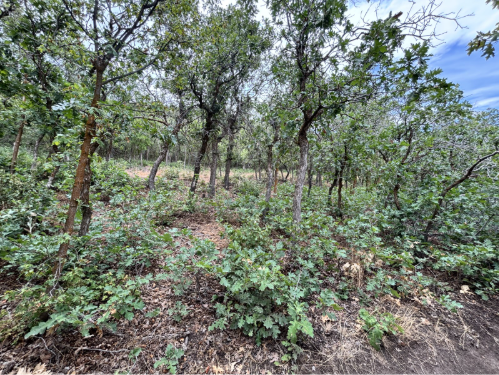
Contact
- Email: [email protected]
Timeline
Work is expected to begin January 2027 and conclude by March 2027. The fuel breaks will be maintained in the future.